Real-World Evidence Presented at AASLD 2026: What Happens in the First Year After Starting Resmetirom

In 658 patients with MASH followed for a mean of 14 months after starting resmetirom (Rezdiffra) in routine GI care, liver enzymes, liver stiffness, liver fat, and FAST scores all declined, and about half of patients with FibroScan results moved to a lower liver stiffness category.

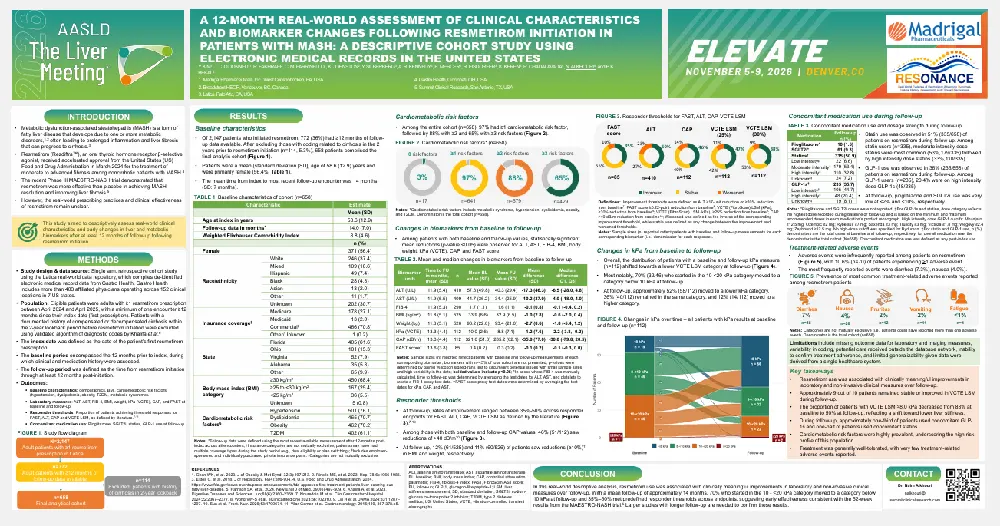
Madrigal Pharmaceuticals is presenting these findings as Poster 3516 at The Liver Meeting (AASLD) in Denver, November 5 to 9, 2026, with Latica as research partner. The study used the Latica real-world data repository, which compiles de-identified EMR data from Gastro Health, with authors from Madrigal, Broadstreet HEOR, Latica, Gastro Health, and Summit Clinical Research.

Why real-world data matters here

Resmetirom, an oral thyroid hormone receptor β-selective agonist, received accelerated FDA approval in March 2024 for adults with noncirrhotic MASH and moderate-to-advanced fibrosis, after the Phase 3 MAESTRO-NASH trial showed it outperformed placebo on MASH resolution and fibrosis. Clinical trials establish efficacy under controlled conditions. Real-world data answer a different set of questions:

  • Who is actually being prescribed the therapy in routine practice?
  • How do liver and metabolic markers change outside a trial setting?
  • How does treatment interact with other common therapies, such as GLP-1 receptor agonists?

How the study was designed

A single-arm, retrospective cohort study using the Latica real-world gastroenterology data repository, sourced from Gastro Health’s network of more than 400 physicians at 152 locations across 7 states.

01

Population

Adults with at least one resmetirom prescription between April 2024 and April 2025, and at least one encounter 12 or more months after starting.

02

Exclusion

compensated or decompensated cirrhosis in the 2 years before starting, identified with a validated diagnostic code algorithm

03

Index date and baseline

first resmetirom prescription, with baseline assessed over the prior 12 months

04

Measures

ALT, AST, FIB-4, BMI, weight, FibroScan liver stiffness (VCTE) and CAP, FAST score, cardiometabolic risk factors, concomitant medications, and treatment-related adverse events

05

Responder thresholds

ALT reduction of 17 U/L or 20%; FAST reduction of 0.22 or more; liver stiffness reduction of 25% or 30%; CAP reduction of more than 40 dB/m

Who is starting resmetirom

Of 2,147 patients who started resmetirom, 772 (36%) had at least 12 months of follow-up. After excluding 114 with prior cirrhosis, 658 were analyzed. Mean follow-up was 14 months.

01

Demographics

mean age 58.6 years; 56% female; 62% in Florida

02

Weight

68% with BMI 30 or higher, 25% with BMI 25 to under 30

03

Cardiometabolic risk

97% had at least one risk factor, 88% two or more, and 65% three or more; hypertension (76%), dyslipidemia (71%), obesity (70%), type 2 diabetes (61%)

04

Concomitant therapy during follow-up

statins (51%), GLP-1 RAs (36%, one in five of them at high dose), SGLT2 inhibitors (9%), pioglitazone (under 2%)

What changed in 12 months

Among patients with values at both baseline and follow-up, every measure declined, and all changes were statistically significant.


Measure Patients (n) Baseline mean Follow-up mean Mean change Median change
ALT (U/L) 410 57.6 40.3 −17.3 −6.5
AST (U/L) 409 44.7 34.4 −10.2 −4.0
FIB-4 290 1.7 1.6 −0.1 −0.1
FibroScan liver stiffness (kPa) 112 10.0 8.8 −1.2 −2.2
CAP, liver fat (dB/m) 112 321.0 285.2 −35.8 −30.0
FAST score 85 0.4 0.3 −0.1 −0.1
BMI (kg/m²) 525 33.9 32.9 −1.0 −0.6
Body weight (kg) 526 96.2 93.4 −2.7 −1.8

Shifts in liver stiffness (112 patients with FibroScan results):

  • 52% moved to a lower liver stiffness category, 36% stayed in the same category, and 12% moved higher
  •  70% (32 of 46) who started at 10 to under 20 kPa moved below 10 kPa
  • The share of patients above 8.0 kPa fell from 83% to 50%

Responder rates at follow-up:

Endpoint (n) Improved Stable Worsened
ALT, 17 U/L or 20% reduction (410) 50% 27% 23%
Liver stiffness, 25% reduction (112) 47% 42% 11%
CAP, more than 40 dB/m reduction (112) 46% 40% 14%
Liver stiffness, 30% reduction (112) 38% 53% 9%
FAST, 0.22-point reduction (85) 35% 55% 10%

In addition, 12% of patients reduced their BMI by 10% or more, and 11% reduced their body weight by 10% or more.

Safety: 10.6% of patients (70) had at least one treatment-related adverse event recorded, most often diarrhea (7.3%) and nausea (4.0%). Pruritus and vomiting were each about 2%.

The authors conclude that resmetirom use was associated with clinically meaningful improvements over follow-up, consistent with the 52-week MAESTRO-NASH results, and that larger studies with longer follow-up are needed to confirm them.

How to read these results

This is a descriptive analysis, not a comparative effectiveness study.

  • There is no comparator group, so changes cannot be attributed to resmetirom alone
  • 36% of patients also used a GLP-1 RA and 51% a statin during follow-up, which may affect liver and weight measures
  •  Follow-up values were available for subsets of patients (FibroScan for 112, FAST for 85)
  •  The comparison with MAESTRO-NASH is qualitative; the poster does not show trial data side by side
  • Adverse events drawn from records may be undercounted, adherence could not be confirmed, and data come from one health system

How to read these results

The study was possible because the data come from specialty care, where MASH is diagnosed and managed. Records from Gastro Health’s community GI practices include the measures hepatologists use to assess and monitor disease, such as VCTE liver stiffness, CAP, and FAST scores, alongside labs, medications, and comorbidities. Claims-based datasets typically lack these clinical values.

Linking those measures across each patient’s care is what allowed the research team to follow 658 patients for a mean of 14 months. Earlier analyses from the same data source were presented at Liver Connect 2025 and AASLD 2025.

View the Full AASLD The Liver Meeting Poster

02

Poster

3516, “A 12-Month Real-World Assessment of Clinical Characteristics and Biomarker Changes Following Resmetirom Initiation in Patients with MASH: A Descriptive Cohort Study Using Electronic Medical Records in the United States”

03

Event

The Liver Meeting (AASLD), Denver, November 5 to 9, 2026; abstract published in Hepatology, pages S1807 to S1808

04

Authors

Yestle Kim, John O’Donnell, Christina Parrinello (Madrigal Pharmaceuticals); Romina Fakhraei, Karissa Johnston, Andrew Kennedy, Emily Mercer (Broadstreet HEOR); Yael Silberberg, Robert Eisdorfer, Karin Keren (Latica); Rajagopal Chadalavada, Pradeep Bekal (Gastro Health); Naim Alkhouri (Summit Clinical Research)

Exploring real-world evidence in GI or hepatology? Contact Latica at [email protected] to request a data feasibility assessment.
About Latica

Latica (formerly Lynx.MD) delivers a transformative healthcare data ecosystem that accelerates medical research through secure collaboration and advanced insights. Founded by a visionary team of healthcare and technology innovators, Latica’s best-in-class data network empowers providers, researchers, and life science organizations to unlock actionable insights from high-quality, high-impact structured and unstructured data. Committed to driving breakthroughs in healthcare innovation and care delivery, Latica’s network is improving outcomes and shaping the future of medicine.

GLP-1 Prescribing Is Quietly Becoming a Retention Strategy for GI Practices

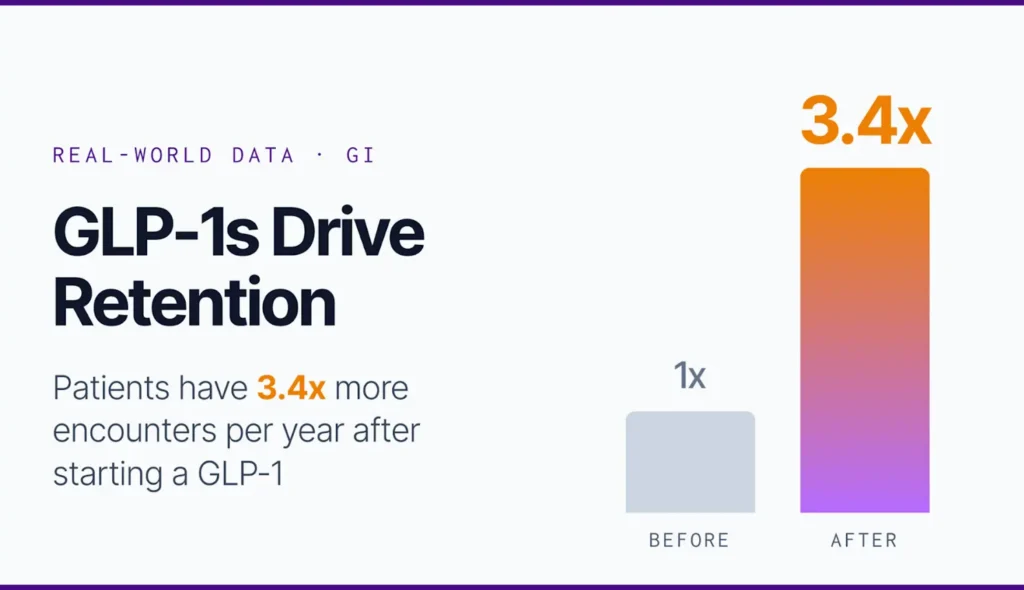
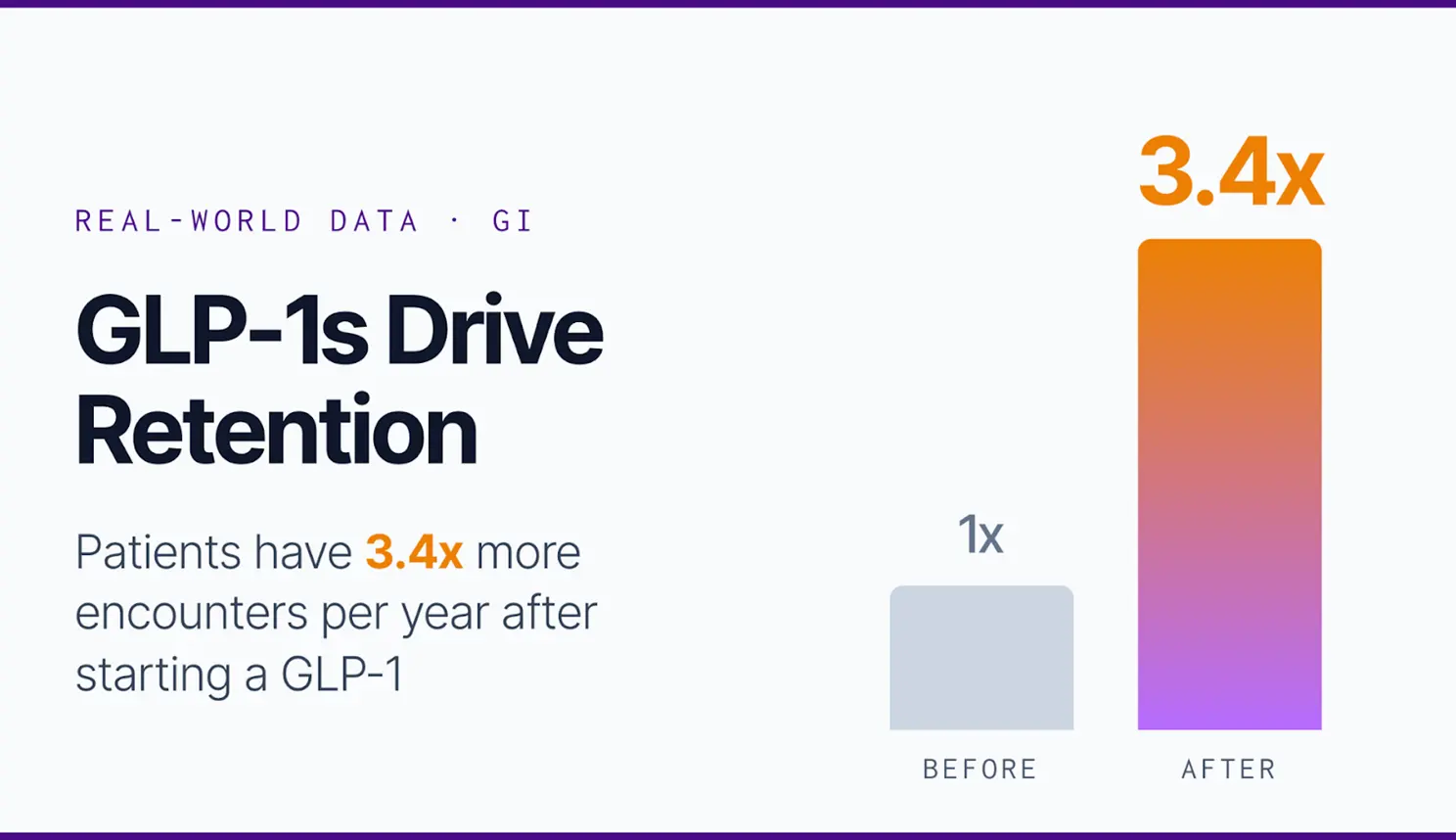
Most conversations about GLP-1s focus on weight loss, supply, or cost. In our GI practice data we see something else is happening that deserves just as much attention: patients who start a GLP-1 or other GLP-1 Receptor Agonists, (GLP-1 RAs) come back to see their doctor far more often.

Using our extensive EHR and claims data across the Latica GI practice network, we compared each patient’s yearly encounters before and after starting a GLP-1. Here is what we found.

The Numbers

3.4x

More encounters per year after a patient starts a GLP-1, compared with their own pre-initiation baseline.

18.3x

Growth in active GLP-1 patients in our network, from 1,691 in Q1 2020 to 30,867 at peak in Q3 2025.

20,391

New GLP-1 patient starts in a single quarter (Q3 2025), the highest in the period we studied.

What the Data Tells Us

The 3.4x increase is the headline, but the growth curve is what matters. This is  a rapidly growing group of patients. Active GLP-1 patients in our network grew from 1,691 in Q1 2020 to 30,867 at peak in Q3 2025, and new starts hit 20,391 in one quarter. For context, our analysis counts any patient with a GLP-1 prescription in a given quarter, including semaglutide, tirzepatide, dulaglutide, liraglutide, and exenatide.

GLP-1 initiation is functioning as an engagement event. Instead of the sporadic, symptom-driven visit pattern typical in GI, patients who start the drug are pulled into ongoing care. They have follow-ups, dose adjustments, and monitoring built into their treatment, and that keeps them connected to the practice.

Why It Matters for Practices

For practice leaders, this means GLP-1 protocols belong in the retention conversation, not just the prescribing one. A patient who is seen regularly is a patient who is less likely to drift away from your practice, and one more likely to have other needs identified and addressed.

Why It Matters to Patients

Patients who maintain consistent care tend to have a better care experience.  A patient who is seen regularly has a clinician watching how they respond to treatment, and that makes a real difference in the experience of care.

More consistent contact means earlier symptom detection, so problems are caught before they turn into a crisis visit. It means better dose management, with adjustments made based on how the patient is actually doing. And it means a more coordinated care experience, where the patient has a steady relationship with their care team instead of showing up only when something goes wrong.

What Comes Next

We are continuing to expand this analysis across additional therapeutic areas and practice types. If you want to understand how this pattern looks in your own patient population, reach out to your Latica partner and we can run the numbers together.

About Latica

Latica (formerly Lynx.MD) delivers a transformative healthcare data ecosystem that accelerates medical research through secure collaboration and advanced insights. Founded by a visionary team of healthcare and technology innovators, Latica’s best-in-class data network empowers providers, researchers, and life science organizations to unlock actionable insights from high-quality, high-impact structured and unstructured data. Committed to driving breakthroughs in healthcare innovation and care delivery, Latica’s network is improving outcomes and shaping the future of medicine.

AI-Driven Quality Improvement for Colonoscopy Surveillance: 97.5% Recall Resolution in Adenoma Patients Across 1.2 Million Procedures

DDW 2026 Research Summary · Latica & Gastro Health

Presented at DDW 2026 (Digestive Disease Week) · Community Gastroenterology Practice Group, Multi-State (Gastro Health) · AI Partner: Latica

1.2M Colonoscopy procedures analyzed
97.5% Recall resolution in adenoma patients (retrospective, up from 87%)
93.2% Of all procedures achieved a resolved recall plan
100% Scheduling completion for the 2,000 prioritized overdue high-risk adenoma patients (2025)

The Problem

Missing documented recall intervals create gaps in colorectal cancer screening and prevention. At Gastro Health, a multi-state community gastroenterology practice, more than 250,000 of 1.2 million procedures (22.3%) lacked a documented recall plan. Latica and Gastro Health evaluated whether a data informed intervention process could systematically close this gap and align recall intervals with clinical guidelines with particular focus on higher-risk adenoma patients.

The AI Intervention

Latica’s algorithm automatically extracted adenoma findings from pathology reports for risk stratification and identified patients appropriately excluded from recall by analyzing physician notes. Recall resolution was defined as a documented recall date, a verified recall exclusion, or a future scheduled recall. The program, initiated in May 2024, combined two distinct patient populations. One analyzed retrospectively and one monitored prospectively:

Retrospective Cohort

802,446 historical procedures · 2017–2023

Historical procedures were reviewed using AI-prioritized lists stratified by adenoma burden and time-since-colonoscopy. Patient records were updated with guideline-based recall plans, and overdue patients were contacted and scheduled.

Prospective Cohort

393,406 new procedures · January 2024–present

Continuous AI monitoring of new procedures, with reports generated approximately one month post-procedure to surface cases requiring recall entry — preventing new documentation gaps from forming going forward.

Results

Retrospective Remediation (2017–2023 procedures)

MetricBeforeAfterChange
Overall cohort recall resolution77.7%94%+16.3% (p<0.001)
Adenoma subgroup (272,597 higher-risk patients)87%97.5%+10.5% (p<0.001)

The retrospective intervention resolved recall plans for 131,000 additional patients. Of the higher-risk overdue adenoma cohort, 3,000 prioritized patients achieved 100% scheduling completion in 2025, with intervention continuing for additional overdue patients.

Prospective Monitoring (Jan 2024–present procedures)

Continuous AI monitoring maintained a 91.5% recall resolution rate across new procedures overall, and 96.1% among new adenoma patients demonstrating that prospective surveillance sustains high resolution rates without requiring retrospective cleanup.

Combined Impact Across ~1.2 Million Colonoscopies

1,113,152 colonoscopies (93.2%) achieved a resolved recall plan across both cohorts combined. The remaining 6.8% (81,700 procedures) are still under ongoing intervention.

Why It Matters

This is, to Latica and Gastro Health’s knowledge, the first AI-enabled, EMR-integrated program to apply both systematic retrospective remediation and prospective monitoring across more than 1 million colonoscopies to improve recall documentation and scheduling. The result: near-complete recall resolution for adenoma patients and timely scheduling pathways for high-risk individuals in a real-world community practice setting. Large language models, now being implemented, will further enhance adenoma risk stratification and advance precision care navigation in community gastroenterology.

Frequently Asked Questions

What is the difference between the retrospective and prospective patient groups in this study?

The retrospective cohort was 802,446 historical procedures (2017–2023) reviewed after the fact to remediate missing recall plans. The prospective cohort was 393,406 new procedures (Jan 2024–present) continuously monitored by AI in near-real time to prevent gaps before they occur.

What recall resolution rate did the AI intervention achieve in adenoma patients?

97.5% in the retrospective adenoma subgroup (up from 87%, p<0.001), and 96.1% among adenoma patients under ongoing prospective monitoring.

How many total colonoscopy procedures were included?

Approximately 1.2 million, combining the 802,446-procedure retrospective cohort and the 393,406-procedure prospective cohort. 93.2% (1,113,152 procedures) achieved a resolved recall plan.

Who conducted this research?

Latica., in partnership with Gastro Health (a multi-state community gastroenterology practice). Findings were presented at DDW 2026.

Source: “AI-Driven Quality Improvement for Colonoscopy Surveillance: Achieving 97.5% Recall Resolution in Adenoma Patients Across 1.2 Million Procedures.” Presented at Digestive Disease Week (DDW) 2026. Latica.AI & GastroHealth.“At Forefront, every decision we make is guided by one goal: to elevate the experience of both our patients and our physicians.” said Betsy Wernli, President of Forefront Dermatology. “Partnering with Latica enables us to advance this mission even further – leveraging data to drive better insights, optimize care, and improve outcomes in conjunction with our physician-led, best-in-class clinical quality program Forefront IQ”

About Latica

Latica (formerly Lynx.MD) delivers a transformative healthcare data ecosystem that accelerates medical research through secure collaboration and advanced insights. Founded by a visionary team of healthcare and technology innovators, Latica’s best-in-class data network empowers providers, researchers, and life science organizations to unlock actionable insights from high-quality, high-impact structured and unstructured data. Committed to driving breakthroughs in healthcare innovation and care delivery, Latica’s network is improving outcomes and shaping the future of medicine.